
RESOURCES FROM THE CORE PROJECT
What we’re learning about helping young people grow.
For more than 20 years, we’ve worked alongside students and educators in classrooms, groups, trainings, and school-wide experiences. This is where we share what that work continues to teach us, along with the research that helps us understand why it matters.
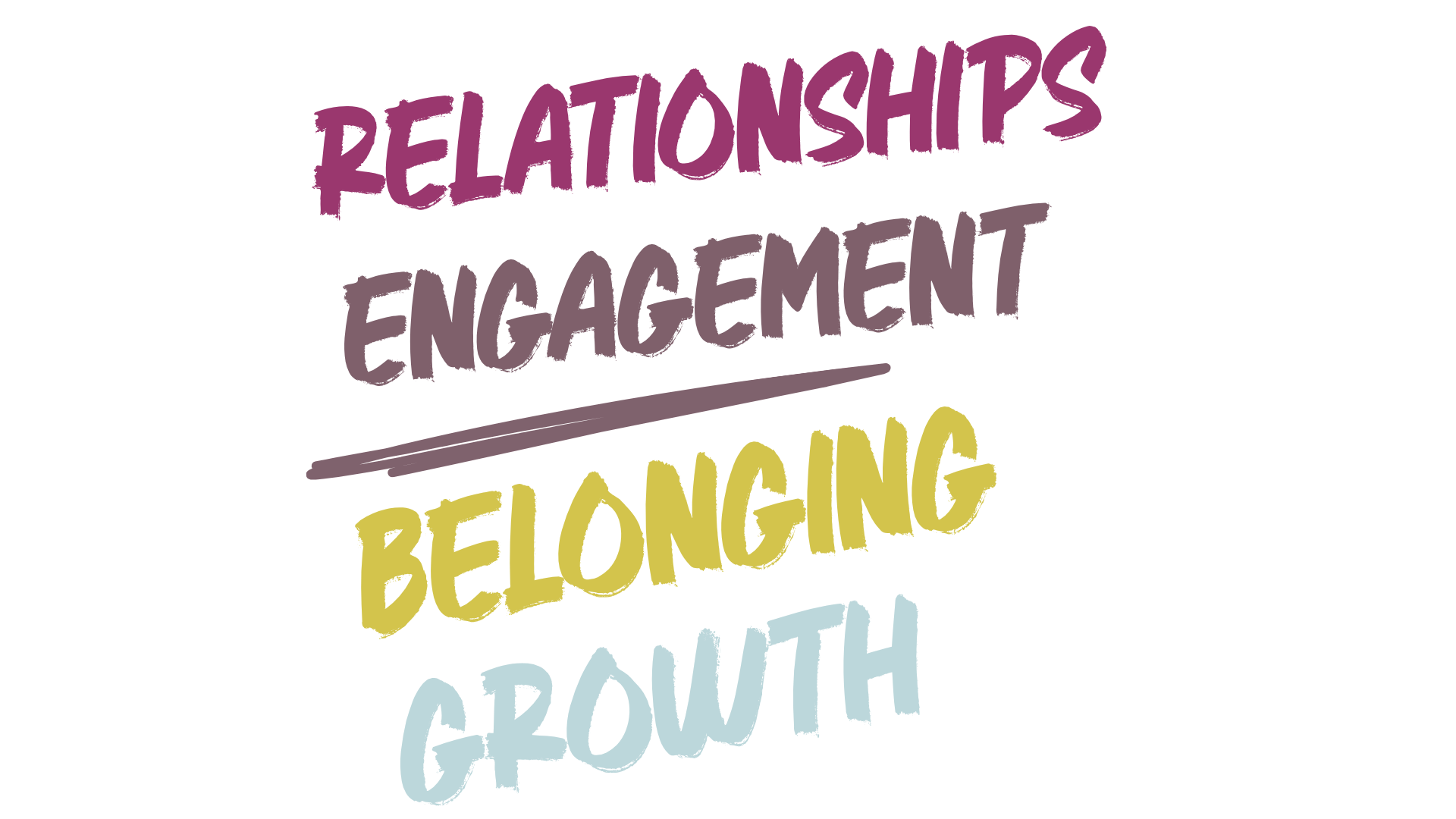
Relationships | Engagement | Belonging | Growth
And the everyday experiences that shape how young people see themselves, other people, and the communities they’re part of.
Students don’t need another definition of belonging.
FROM THE CORE / 01
They need more opportunities to experience it.
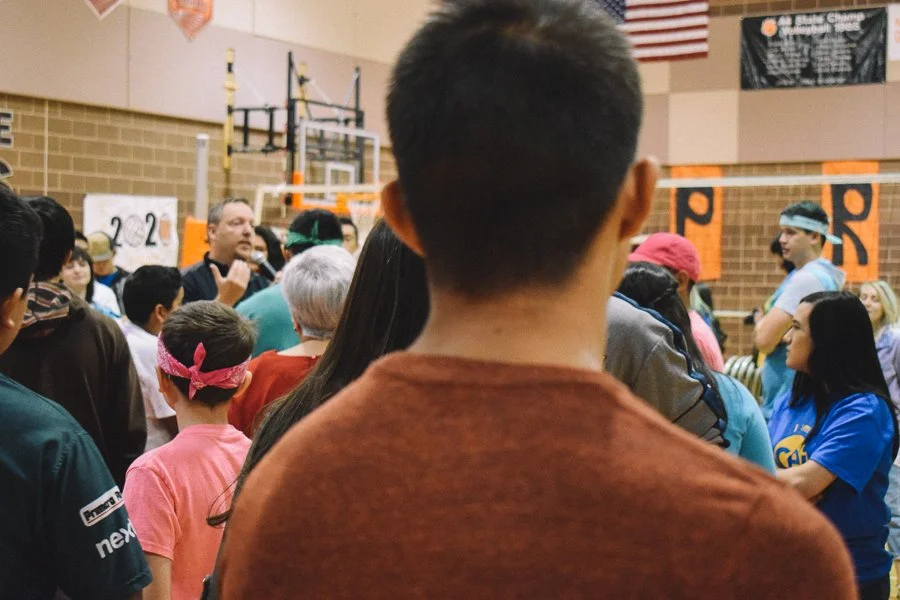
Students hear a lot about kindness, empathy, respect, communication, and belonging. Knowing what those words mean is important. But understanding an idea and having an experience that changes the way you see another person are different things.
A conversation with someone outside your usual circle. Working through something difficult together. Realizing you made an assumption that wasn't quite right. Being listened to when you expected to be dismissed.
Those moments aren't complicated. But they give students something information alone cannot: something real to respond to, reflect on, and remember.
That's one of the ideas we keep coming back to in our work.
THE THINGS WE KEEP COMING BACK TO
Four areas. A deeper look.
These ideas, questions, and experiences show up again and again in our work with students and educators. They shape what we pay attention to, what we continue to learn about, and much of what you’ll find here.
01 / RELATIONSHIPS
Young people develop in relationship with other people. We explore what helps students feel known, supported, challenged, and connected to the adults and peers around them.
Explore Relationships →
02 / ENGAGEMENT
Being present isn’t the same as being involved. We explore what makes students willing to participate, take a risk, contribute, and care about what happens around them.
Explore Engagement →
03 / EXPERIENCE
Some things are difficult to learn from information alone. We look at what happens when students have something real to do, notice, discuss, practice, and reflect on.
Explore Experiential Learning →
04 / OWNERSHIP
Students and adults cannot control everything around them, but they do influence it. We explore responsibility, resilience, communication, behavior, and the choices that shape a community.
Explore Ownership →
THE RESEARCH BEHIND THE WORK
Experience gives us questions. Research helps us understand them.
More than 20 years of working with students and educators has shaped how we think about learning, relationships, and growth. Research helps us look more closely at what we observe and understand how those experiences connect to what is known about adolescent development and learning.
We use both to inform our work.
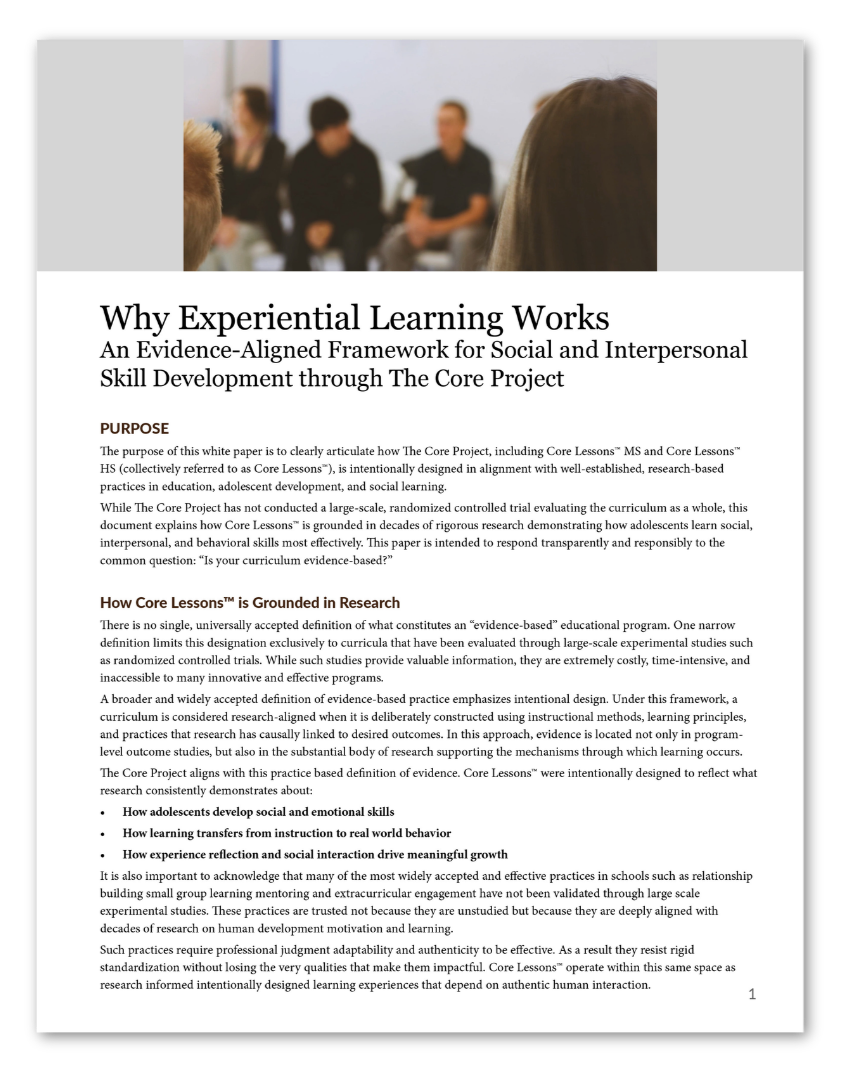
EXPERIENTIAL LEARNING
Why Experiential Learning Works
A look at the research behind learning through experience, reflection, interaction, and application, and why those elements matter when students are developing personal and interpersonal skills.
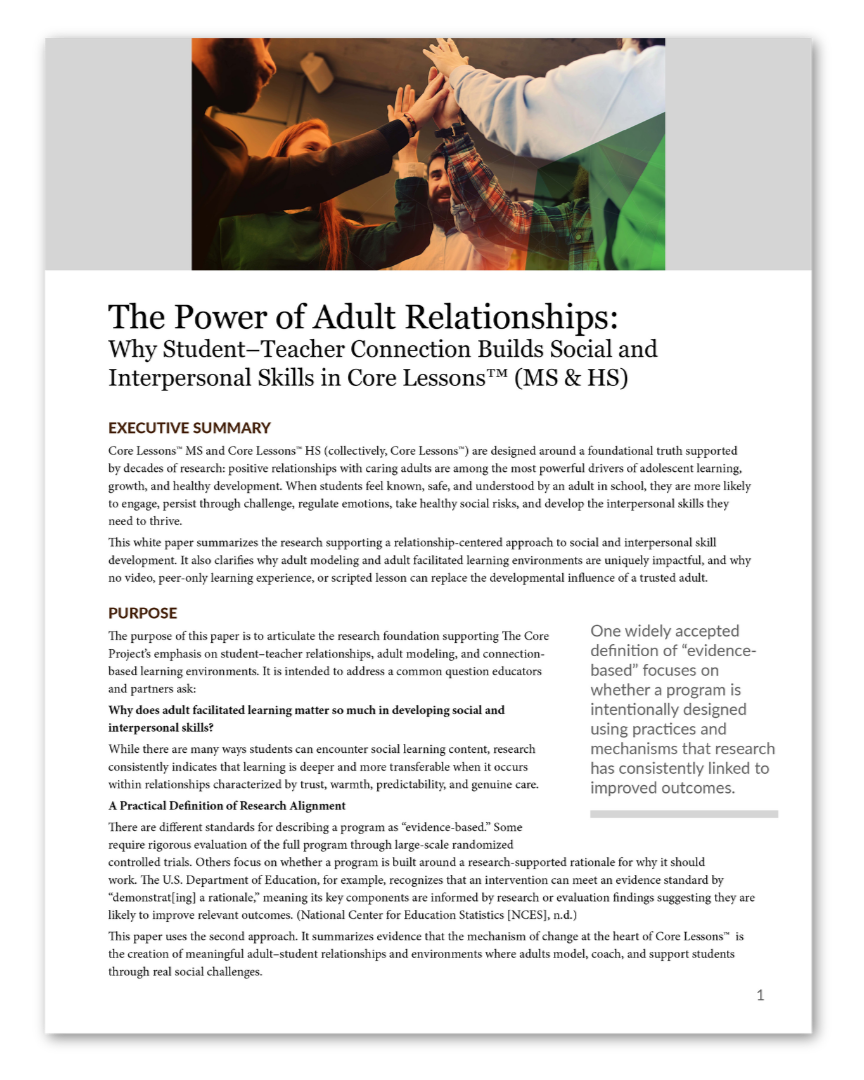
ADULT RELATIONSHIPS
The Power of Adult Relationships
What research tells us about supportive adult relationships, modeling, connection, and the role adults can play in student development.
CORE LESSONS + RESEARCH
See how the research shows up in the curriculum.
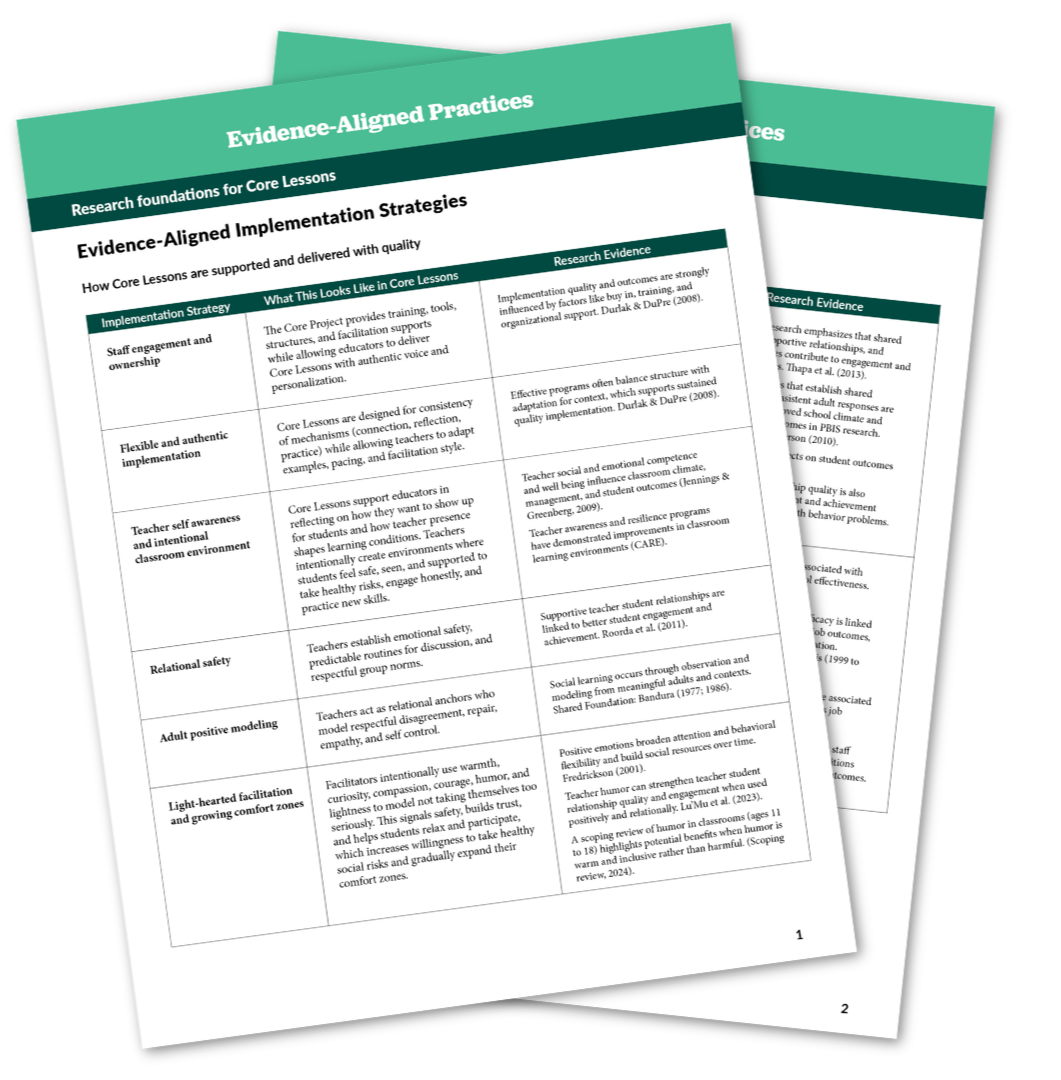
Our Evidence-Aligned Practices chart connects specific Core Lessons design and implementation practices with the research that informs them, from experiential learning and adult relationships to reflection, skill transfer, belonging, and adolescent development.
QUESTIONS WE ARE EXPLORING
Some questions deserve a closer look.
These are questions that come up often in our work. We’re digging into the research behind each one and will continue adding what we learn here.

What does research say about school connectedness?
A look at how relationships, belonging, and connection to school influence students’ experiences, engagement, and well-being.

Why do relationships affect student engagement?
What supportive relationships have to do with participation, motivation, willingness to try, and connection to school.to do with participation, motivation, and willingness to try.

What actually helps middle and high school students engage?
A closer look at participation, relevance, relationships, autonomy, and the conditions that make students more willing to get involved

Why is reflection important after an experience?
How reflection helps students make meaning from an experience and carry what they learn into future situations.

What helps students build resilience and tolerate discomfort?
What research tells us about challenge, coping, emotional regulation, supportive relationships, and learning to work through difficult experiences.
THINGS WE ARE THINKING ABOUT
Observations from the work.
More than 20 years of working with students and educators leaves us with a lot of questions. These are some of the ones we think are worth exploring.
Working With Students Who Resist Participating
A practical look at what can sit underneath student apathy, resistance, low participation, and the feeling that getting students involved is harder than it used to be. →
What Actually Helps Students Feel Connected at School?
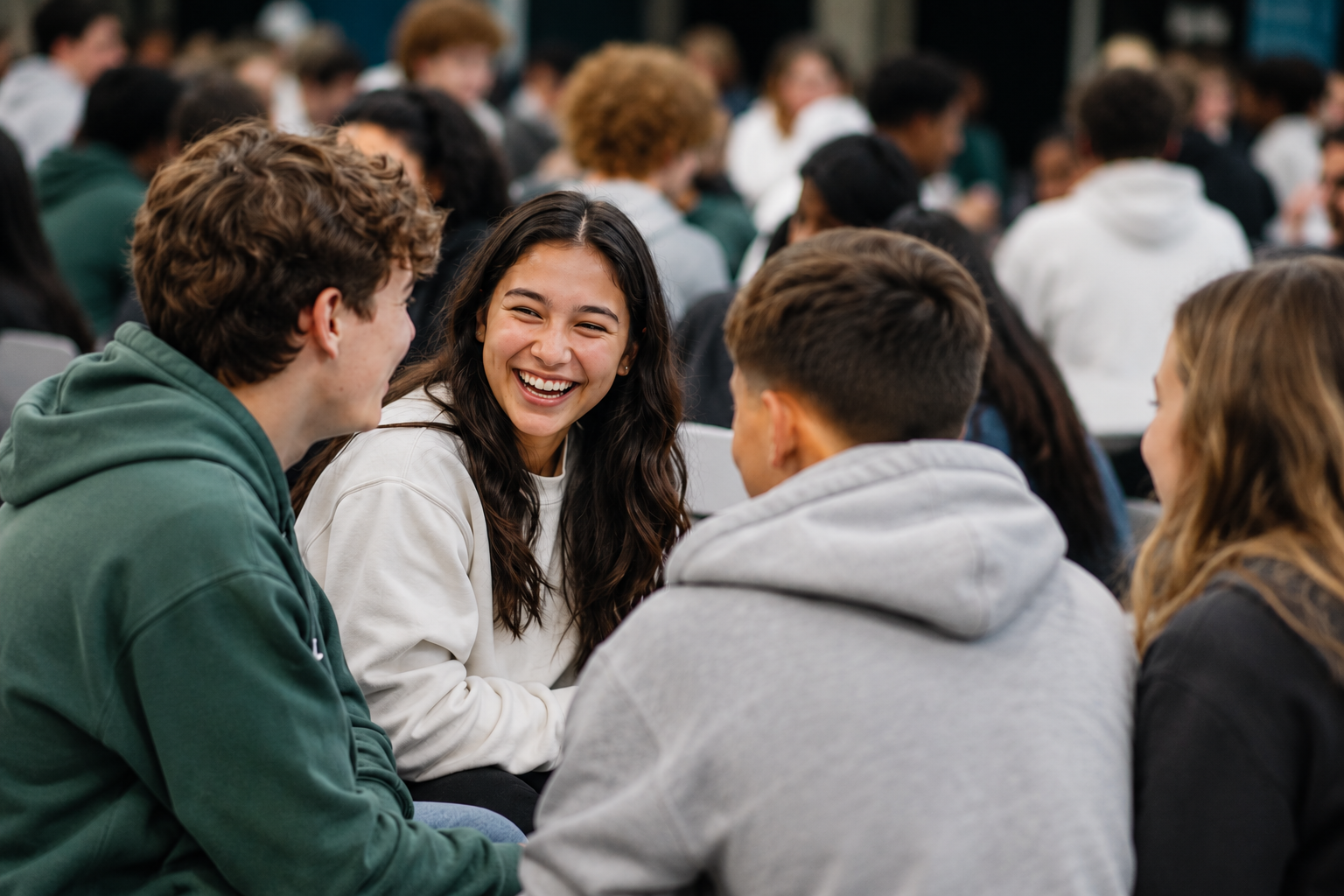
A look at the everyday relationships, interactions, routines, and shared experiences that can strengthen school connectedness. →
How Do You Have Meaningful Conversations With Middle and High School Students?
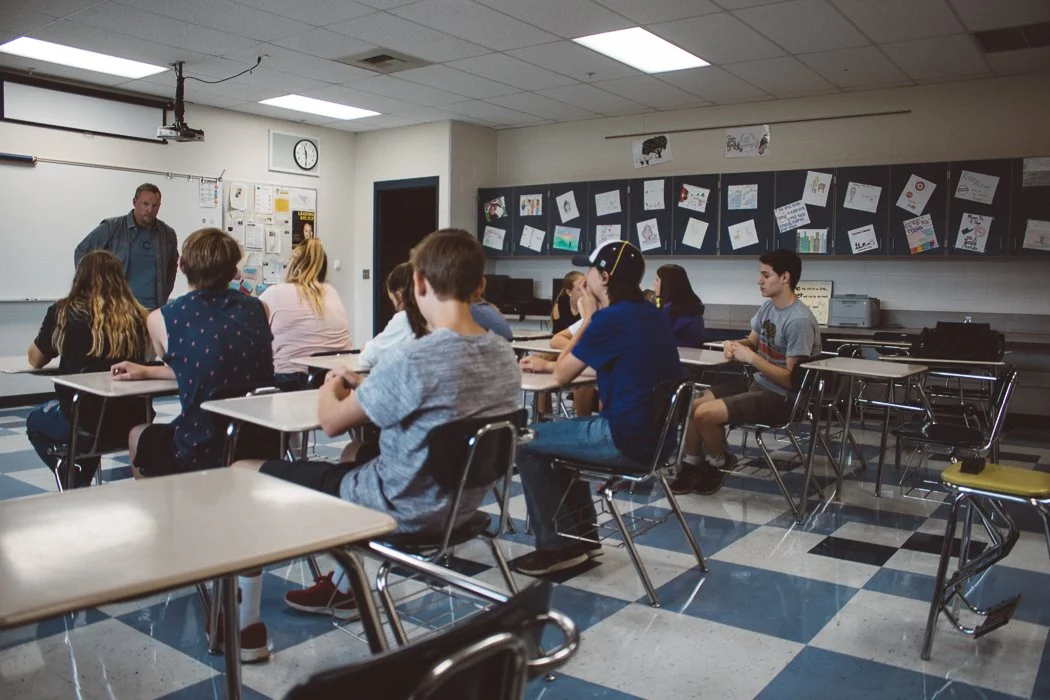
Meaningful conversation rarely starts with the perfect question. Read more about what older students need to engage. →
What Makes a Student Activity Actually Meaningful?

Why some activities lead to participation, reflection, and connection while others feel forced, juvenile, or disconnected from students’ lives. →
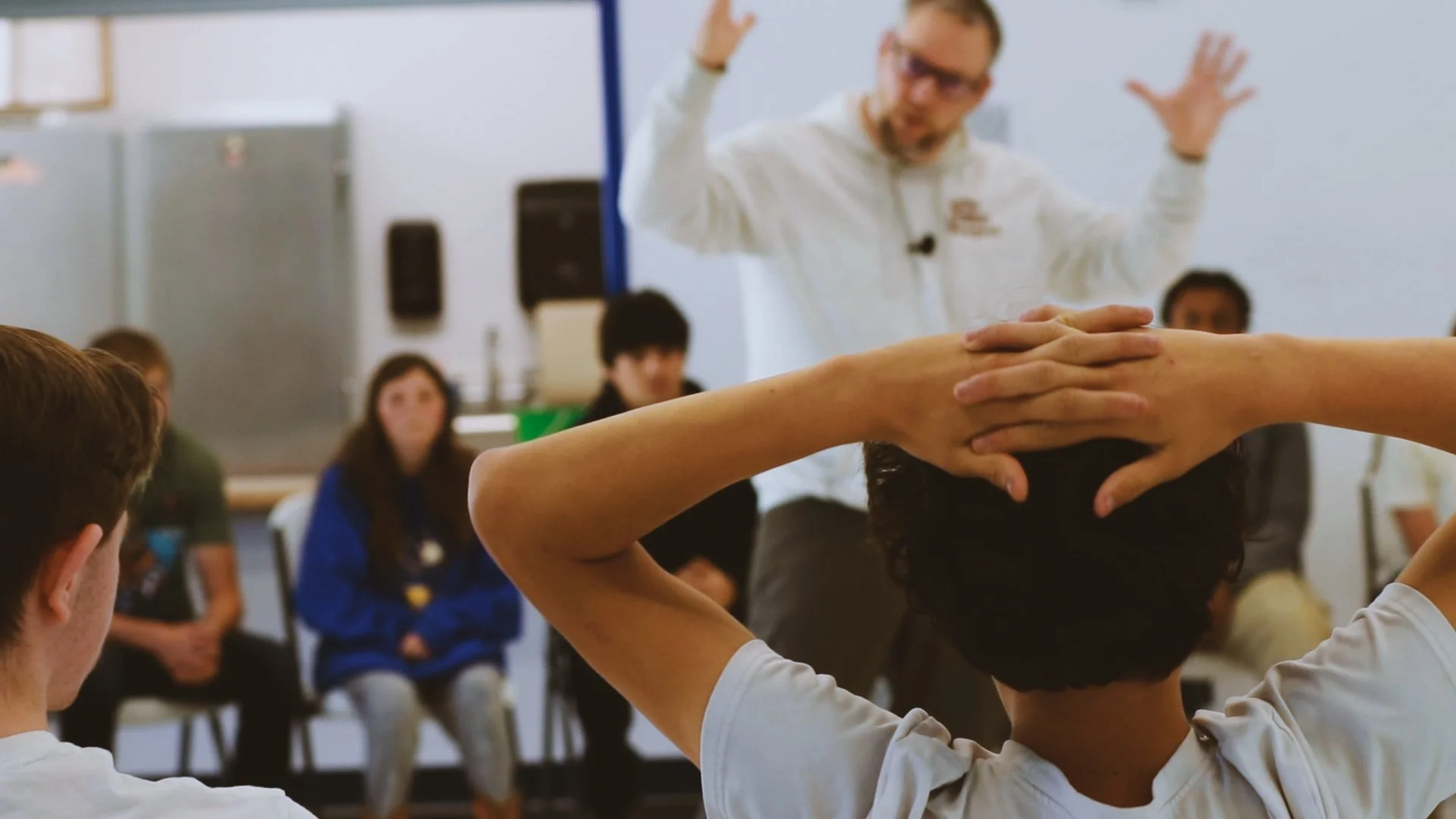
How Can Schools Build Belonging Without Forcing Vulnerability?
Why belonging grows through repeated experiences of participation, trust, interaction, and being known, rather than asking students to disclose more than they want to. →
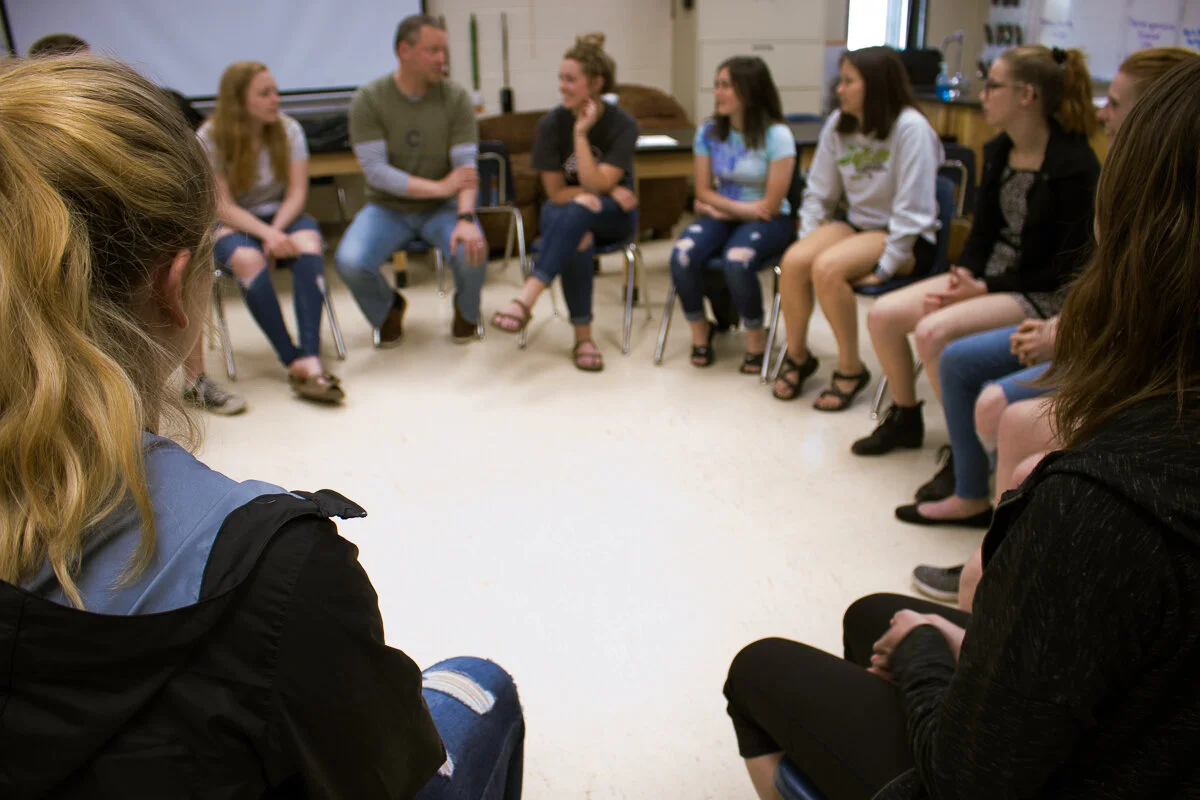
Why are Middle School students so disengaged?
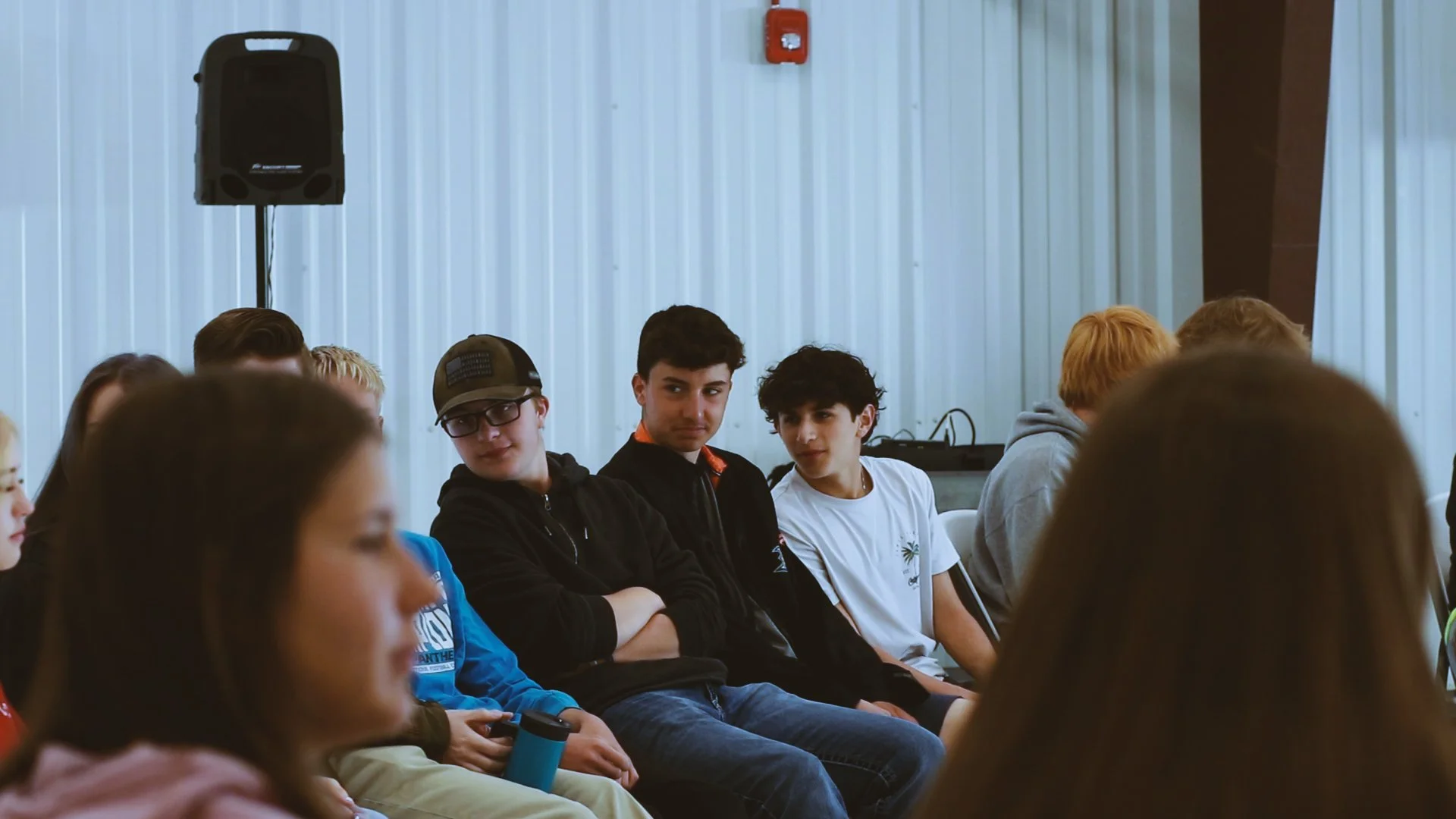
When a student resists participating, our instinct is often to find a better question. But what if the questions we ask aren’t the problem? →
What Should Schools Look for in a Middle or High School SEL Curriculum?
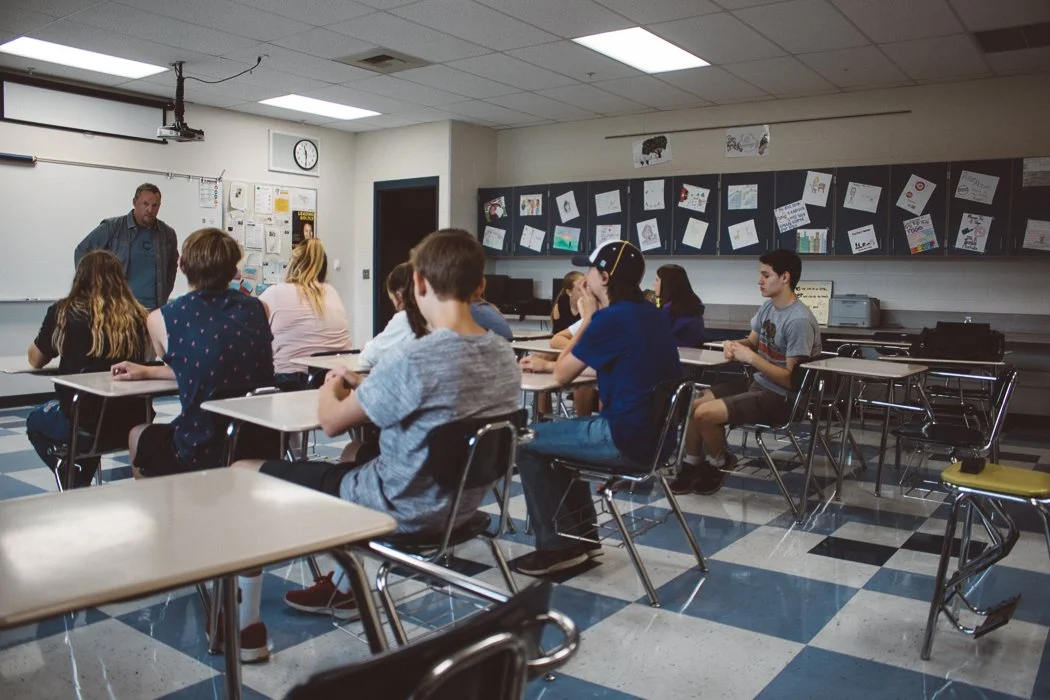
A practical guide to evaluating developmental fit, teacher burden, student engagement, lesson design, implementation, relationships, and opportunities for real-world practice. →
TRY THIS IN THE CLASSROOM
One small thing worth trying.
Not every useful idea needs to become a lesson, training, or research paper. Sometimes a small change in how we respond, ask a question, or structure an interaction can change what happens next.
A simple way to maintain curiosity when introducing an activity.
SAY TO YOUR STUDENTS
Start an activity by simply saying, “Let’s try this,” or, “Let’s give this a try.”
It will change everything.
Avoid saying anything about doing an activity.

WHY?
Once the word activity is introduced, students can start anticipating what comes next. Some hear competition. Others worry about their performance, being put on the spot, or looking foolish.
“Let’s try this” keeps the focus on curiosity rather than performance.
It also lowers the stakes. You're not asking students to succeed at something. You're simply asking them to try. And trying leaves room for uncertainty, mistakes, and figuring things out as you go.
That small shift can help maintain the flow of the lesson and keep students in the experience before they have a chance to decide how they feel about it.
HOW WE APPROACH THE WORK
Start with curiosity.
Greg Sommers, founder of The Core Project, tells facilitators not to ask questions just to lead students toward the answer they want to hear.
Ask because you actually want to know.
That sounds simple, but it changes a conversation. Students know when there is a right answer hiding inside a question. They also know when someone is genuinely interested in what they have to say.
The same is true when Greg works with adults. He isn't interested in telling a room full of educators how they should feel about their students, their school, or their work. They know their schools better than he does.
His job is to bring an experience, ask good questions, listen, and help people make their own connections.
Read about Using Curiosity in the Classroom →
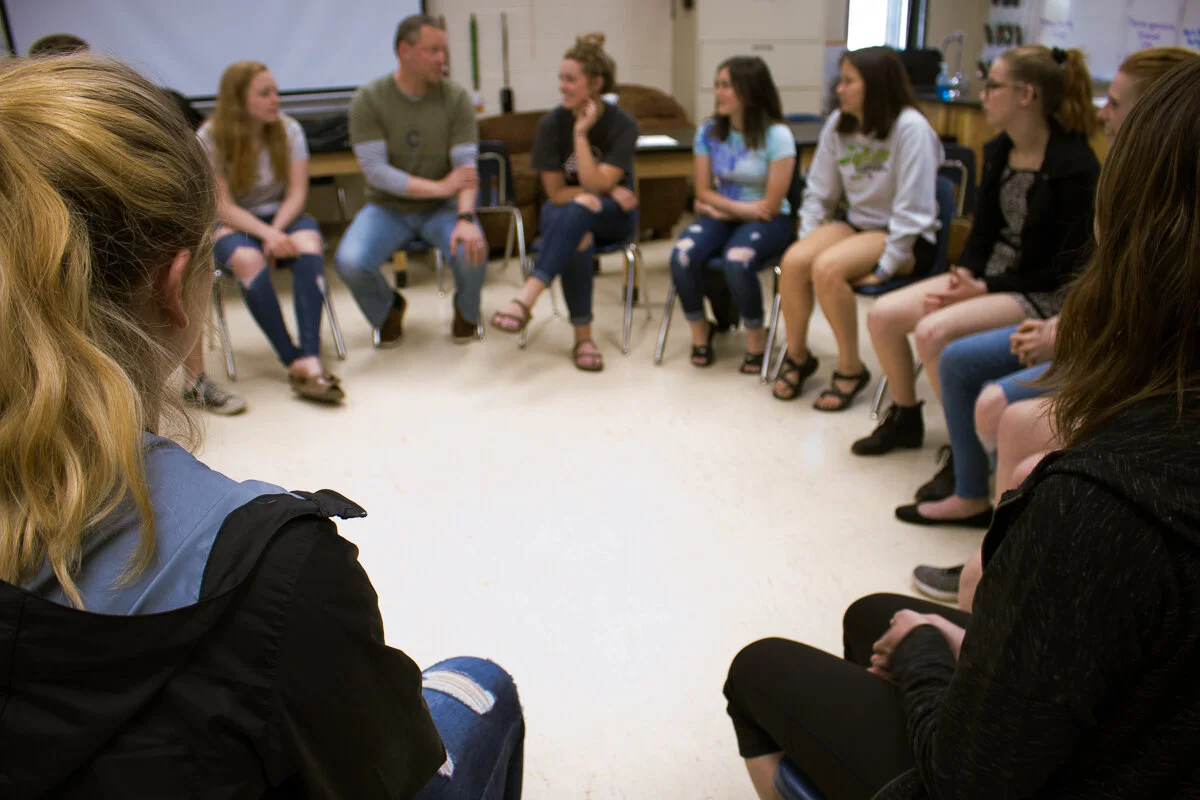
I have never seen a facilitator bring a group of teenagers together as quickly and as closely as Greg does.
His team-building activities are incredibly engaging and well sequenced. Within the first hour, students are participating and making connections in ways that I have not witnessed before.
— Advisor, Teton High School
We’ll continue adding research, observations, practical ideas, and resources as our work with students and educators gives us more worth sharing.
Want to see what this looks like in practice?
Explore Core Lessons, student experiences, and educator experiences from The Core Project.
KEEP EXPLORING
We’re still learning, too.
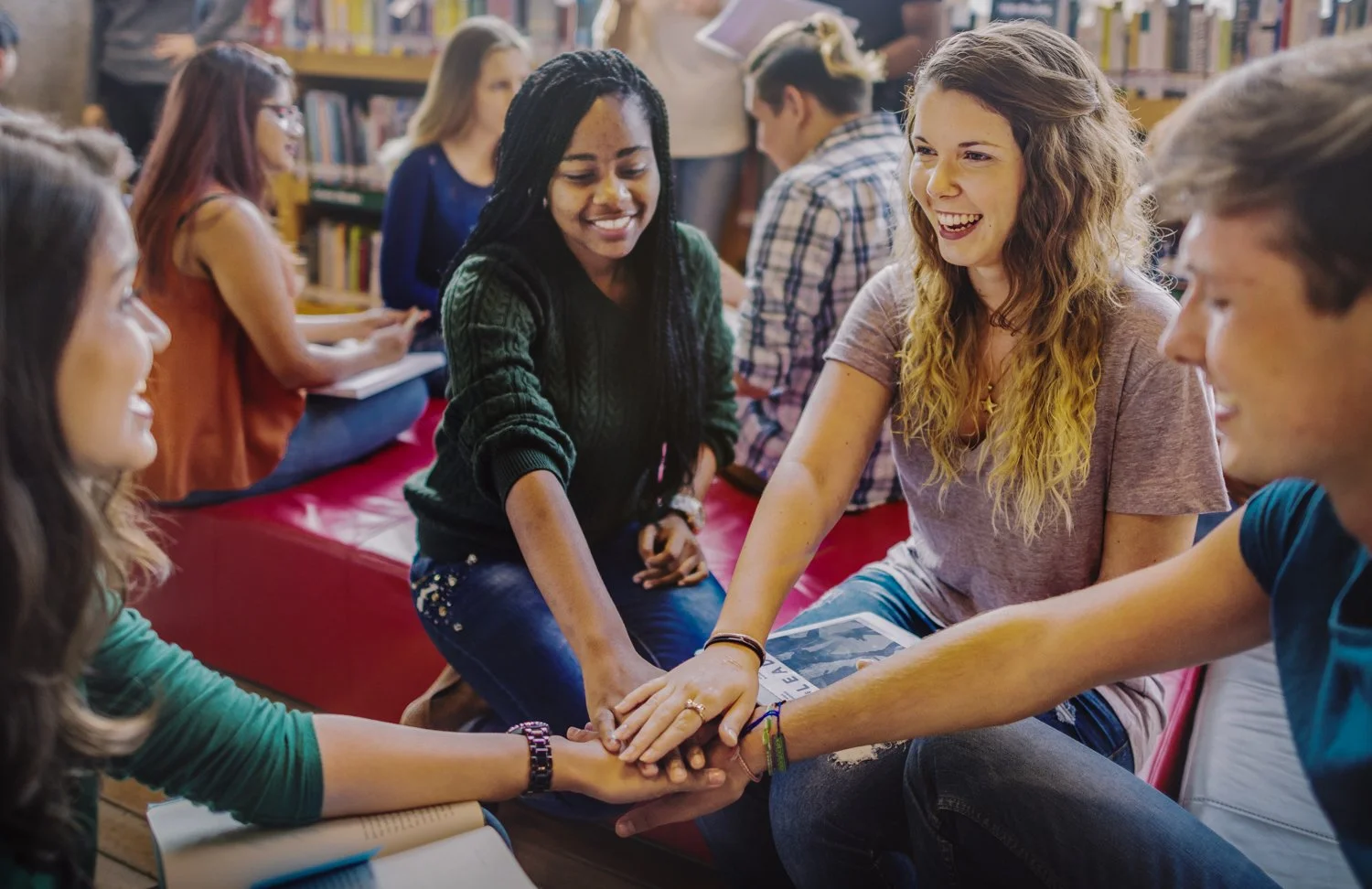

CORE LESSONS
Ready-to-use curriculum that gives educators practical ways to create experiences, conversations, and opportunities for growth with students.
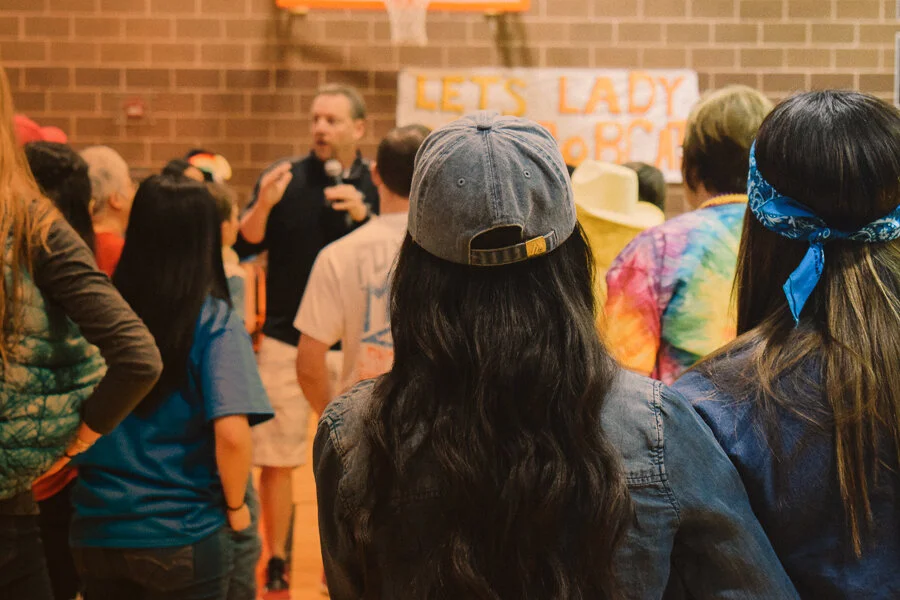

STUDENT EXPERIENCES
Facilitated experiences that bring students together to participate, interact, reflect, and see one another differently.
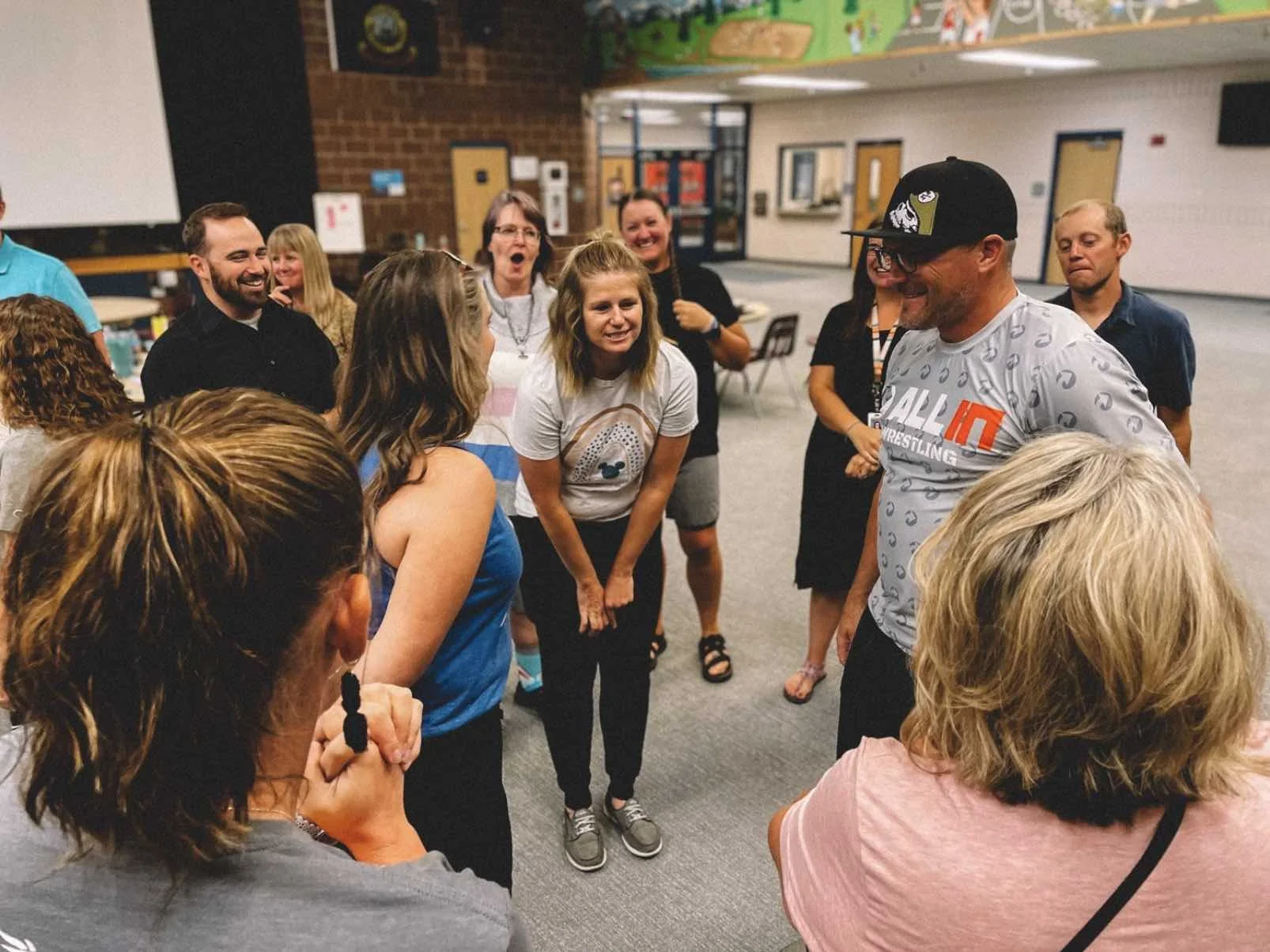

EDUCATOR EXPERIENCES
Experiential professional development that gives educators time to participate, reflect, connect, and bring practical ideas back to their work with students.