
How Do You Have Meaningful Conversations with Older Students?
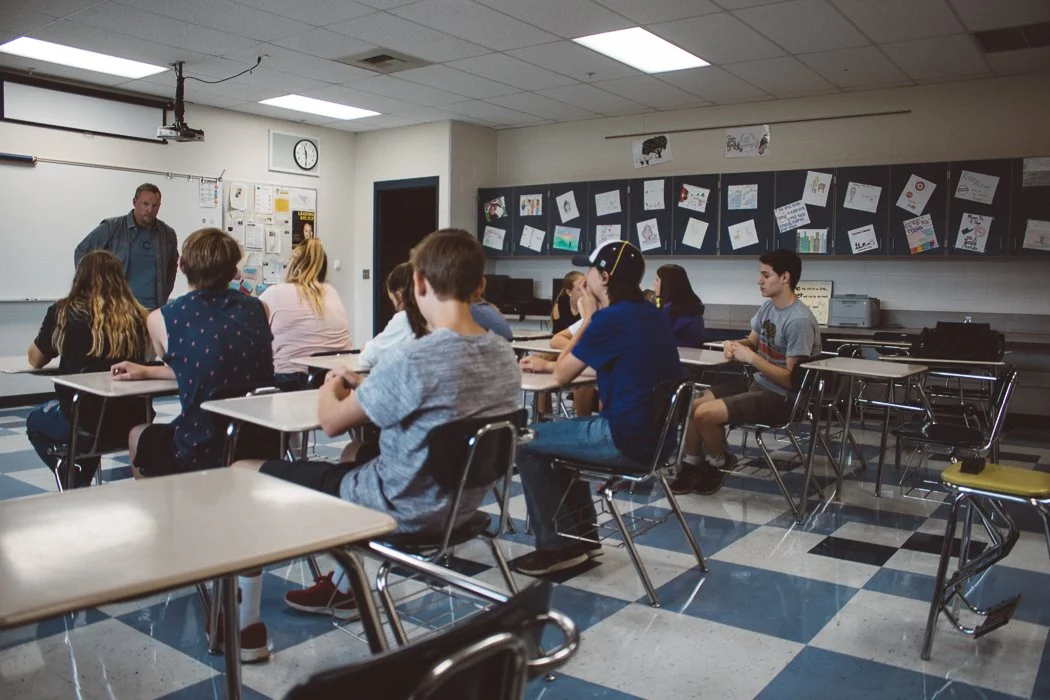
Middle and high school students don’t walk into a classroom and leave the rest of their lives at the door.
They bring friendships, distractions, worries, opinions, and whatever happened five minutes before they got there. Some are ready to participate. Others would rather disappear into the back row.
Teachers know this.
They also know that conversations about things like relationships, responsibility, belonging, or handling difficult situations can get uncomfortable pretty quickly. Even with a curriculum in front of you, it can be hard to know how to get beyond surface-level answers and into a conversation students actually care about.
Older students can be skeptical. They know when they’re being led toward an answer. They also know when something is trying a little too hard to be relevant to them.
So how do we create conversations they actually want to be part of?
After years of facilitating groups of middle and high school students, there are a few things I keep coming back to.
Give them something to experience first.
If I walk into a classroom and ask, “What does respect mean to you?” I can probably predict some of the answers before I ask the question.
Treat people how you want to be treated.
Be nice.
Listen to people.
Or the always reliable, “I don’t know.”
There’s nothing necessarily wrong with those answers. The problem is that we haven’t given students much to think about yet.
Now put those same students into an experience where they have to work together, communicate, make decisions, or respond to one another. Something happens. Maybe they get frustrated. Someone takes over. Someone else checks out. They succeed in a way they didn’t expect.
Now we have something to talk about.
The conversation is no longer about an abstract definition of respect. It’s about what just happened in the room.
That changes things.
Students can notice their own reactions. They can hear how someone else experienced the exact same situation. The conversation has somewhere real to begin.
This is why experience is such an important part of the way we work at The Core Project. The activity isn’t there just to make a lesson more entertaining.
The experience gives the conversation something to work with.
Bring genuine interest to the conversation.
Students are pretty good at recognizing whether an adult is genuinely interested in what they have to say.
If I ask a question because I’m waiting for someone to give me the answer written in my facilitator guide, that isn’t much of a conversation.
Students figure that out quickly.
Before facilitating a discussion, I think it helps to consider why the topic matters to you in the first place.
If the conversation is about perseverance, when has perseverance mattered in your own life? If it’s about relationships, what have your relationships taught you? What are you still trying to figure out?
You don’t need to turn the lesson into a story about yourself. You also don’t need to pretend you have everything figured out.
But there is a difference between asking students questions because the lesson tells you to and asking because you are actually curious about what they think.
That difference matters.
It also means being willing to hear an answer you weren’t expecting.
Students don’t need to arrive at exactly the same conclusion we would. Sometimes the most interesting part of a conversation begins when they don’t.
Don’t try too hard to make it cool.
There can be a temptation when working with teenagers to prove that we understand them.
We add trendy references. We use the latest slang. We find the flashy video. We try to make the lesson feel like something other than school.
Most of the time, I don’t think students need that from us.
They need us to respect them.
That means giving them experiences that are appropriate for their age without talking down to them. It means using real situations instead of manufactured scenarios whenever we can. And it means trusting that a meaningful question can be interesting without dressing it up as something else.
Older students are especially quick to notice when something feels like it is trying too hard.
We don’t need to impress them. We need to give them a reason to care about the conversation.
And sometimes that reason is simply that the conversation is actually about something that matters to them.
Pay attention to what happens after you ask.
There’s another part of meaningful conversation that is easy to overlook.
Students aren’t only paying attention to how you respond to them. They’re watching how you respond to everyone else in the room.
A student gives an answer you weren’t expecting. Another disagrees. Someone makes a joke because they’re uncomfortable. Someone else doesn’t want to answer at all.
What happens next matters.
If students get the sense that there is one acceptable answer, they learn pretty quickly to either give us that answer or stop answering.
But when we respond with genuine curiosity, we communicate that we actually want to understand what they think.
That doesn’t mean every response or behavior is appropriate. It means students can see that they don’t have to perform the conversation correctly in order to have a place in it.
And that may be one of the most important things we can give them.
Meaningful conversations don’t come from finding the perfect question. They come from creating the kind of experience where students have something real to say and believe we actually want to hear it.
