
If you're researching social emotional learning (SEL) curriculum for your middle or high school, there's a good chance you're doing it because you care about more than academics. You want students to feel connected. You want them to develop skills that will serve them long after they leave your school.
And you're willing to do the work of finding something that might actually help. That matters.
There are plenty of SEL programs to choose from, and most promise similar outcomes. But before comparing lesson counts, standards, or pricing, consider a few things we've learned from nearly 30 years of working alongside educators.
1. Don't Judge a Lesson by How It Reads
Some of the most meaningful lessons look surprisingly unimpressive on paper. We have a middle school lesson on grit that includes an activity called The Longest Noise. Students are challenged to make one continuous vocal sound for as long as possible. Then they try to beat their own time. That's it. No fancy materials. Just a room full of kids making noise.
Admittedly, it sounds a little ridiculous. If you're reviewing curriculum, you might be tempted to skip right past it. Please don't. Try the sample lesson.
The real learning happens afterward, when students consider questions like: Could you have gone one second longer? What was going through your mind when you decided to stop? Were you competing against someone else or trying to improve on your own effort? Suddenly, a silly sounding activity becomes an opportunity to examine perseverance and the decisions we make when something gets difficult.
I've often said that a good facilitator can process the fuzz on a tennis ball. Almost any experience can teach us something if we're curious enough to explore it.
A Practical Test: Before dismissing a lesson that looks too simple or flat, try it with a few colleagues or students. Experience it before evaluating it.
2. Don't Take the Relationship Out of Learning About Relationships
Education is constantly changing. New technology and new approaches can bring real value to classrooms. We're all for improvement. But in our rush to keep up with what's next, let's not forget what hasn't changed.
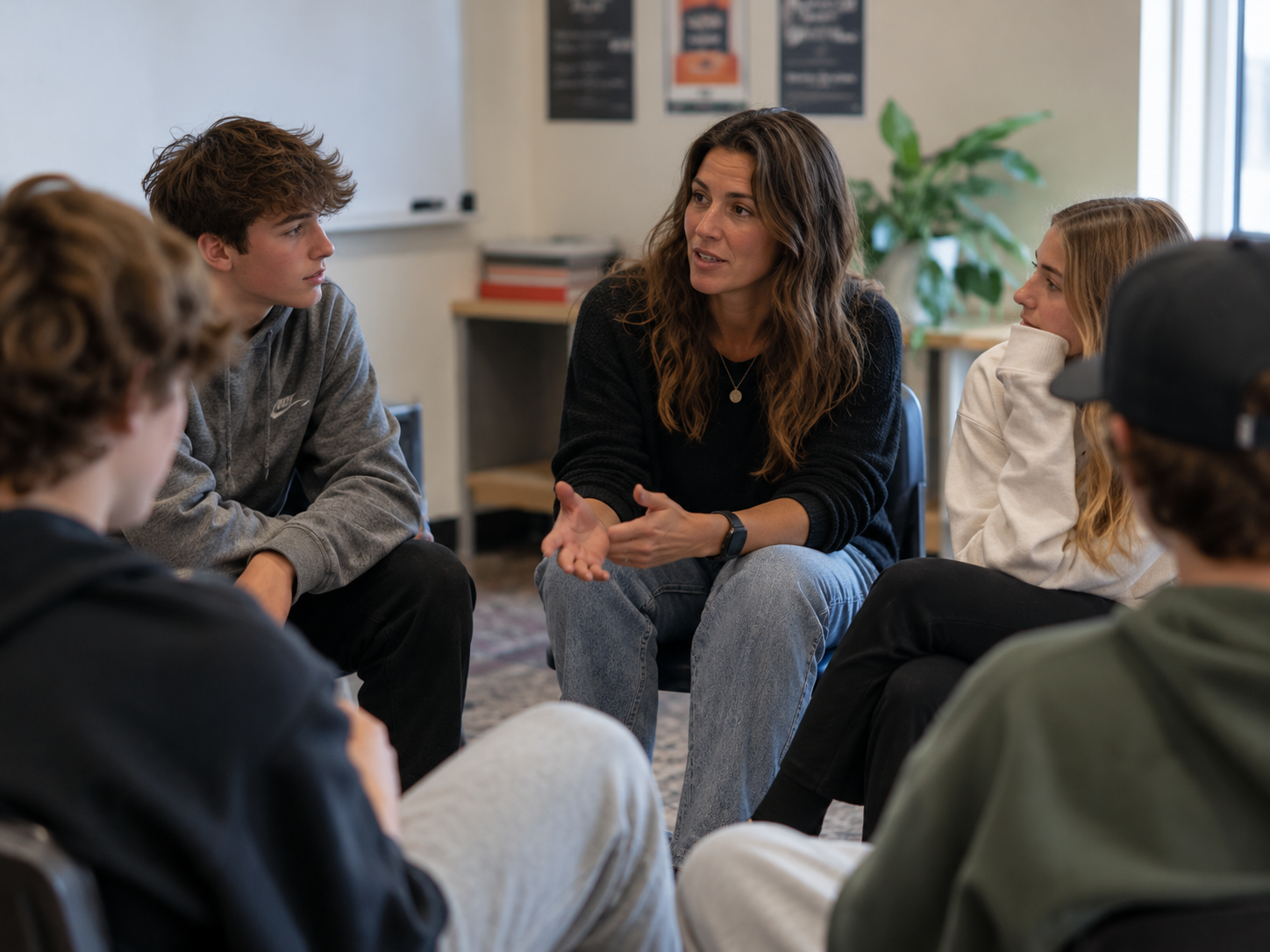
Human beings still need authentic connection. Students need adults who know them. They need opportunities to interact with people who think differently. They need to practice navigating real relationships, not just learn about them. Computers can support learning. They cannot replace the human relationships that make much of that learning meaningful.
When evaluating SEL curriculum, pay attention to what students are actually being asked to do. Are they interacting primarily with a screen, or with one another? Does the curriculum help teachers connect with students, or does it put another layer between them?
Something to Consider: If relationships are central to what you're trying to accomplish, choose a curriculum that keeps people at the center of the experience.
3. Make Sure Teachers Can Actually Use It
We've heard some version of this from educators more times than we can count: Please don't give us one more thing to do. Fair enough. Teachers are already carrying a lot. A curriculum that requires extensive preparation or complicated materials may look impressive during a presentation but struggle to become part of everyday practice.
Look for clear instructions, realistic lesson lengths, and activities that don't require a supply closet full of equipment. But don't confuse simple with shallow. A well-designed lesson can be easy to prepare and still lead to a conversation students remember.
A Practical Test: Hand a sample lesson to a teacher who's never seen the program. Could they confidently facilitate it tomorrow?
4. Look for Discovery, Not Just Information
Most adolescents already know they're supposed to be respectful, responsible, and kind. Knowing what to do and actually doing it are two different things. That's why we believe students need opportunities to experience concepts, examine their own responses, and discover what those experiences mean.
The facilitator's role is important here. Good questions invite students to think rather than simply repeat what they believe the adult wants to hear. And not every student will jump at the opportunity. Some will be hesitant. Some will resist. That's part of working with adolescents.
A good curriculum should give teachers enough structure to lead confidently while leaving room for the students sitting in front of them. The learning shouldn't end when the lesson does, either. Students need opportunities to put what they've discovered into practice in their everyday relationships and decisions.
Ask Curriculum Providers: Can we see a complete lesson, including the activity and the questions that follow? How does the curriculum help teachers facilitate meaningful discussion and encourage students to apply what they've learned?
One Last Thought
A curriculum is a tool. It can provide the structure, but it can't prompt an experience or create the relationship. That's where you come in. The right curriculum should make it easier for you to do what you already care about doing: reaching students, creating opportunities for connection, and helping young people discover something meaningful about themselves.
And if you're taking the time to research curriculum options, asking questions, and looking for something that will genuinely serve your students, I think that says something about you. You care about the experience they're having at school, not just the content they're being taught. That's a pretty good place to start.
Greg Sommers, LPC, is the founder of The Core Project. For nearly 30 years, he has worked alongside students and educators to create meaningful learning experiences rooted in human connection.
Explore Core Lessons: Middle School Curriculum | High School Curriculum